

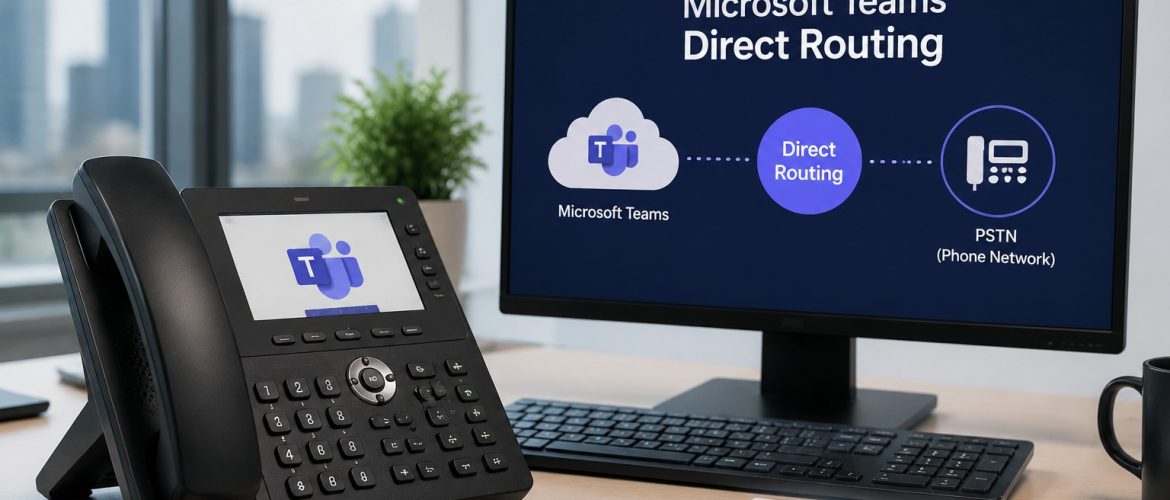
In today’s fast-paced business environment, effective communication is the cornerstone of productivity. Microsoft Teams Direct Routing offers organizations a streamlined solution for business calling and collaboration, connecting Teams users to traditional telephony systems and enabling a seamless communication experience.
What is Microsoft Teams Direct Routing?
Microsoft Teams Direct Routing allows companies to connect their Microsoft Teams environment with an external telephony provider using a certified Session Border Controller (SBC). This integration enables Teams users to make and receive calls to external phone numbers directly from Teams, eliminating the need for a separate phone system.
Benefits of Direct Routing for Businesses
- Unified Communication: Employees can handle calls, chat, video meetings, and collaboration in one platform.
- Cost Efficiency: Reduce dependency on traditional PBX systems while leveraging existing telephony infrastructure.
- Flexibility & Scalability: Easily add or remove users, making it suitable for businesses of all sizes.
- Improved Collaboration: Teams users can switch seamlessly between chats, calls, and video meetings without leaving the platform.
Key Considerations for Implementation
- Telephony Provider: Choose a reliable provider with experience integrating with Microsoft Teams.
- SBC Configuration: Ensure your Session Border Controller is correctly configured to handle call routing.
- Compliance & Security: Verify that all data and calls comply with company policies and regional regulations.
Conclusion
Implementing Microsoft Teams Direct Routing empowers your organization to consolidate communications, reduce costs, and enhance employee productivity. By choosing the right provider and configuring the system correctly, your business can experience seamless voice communication integrated into Teams.
For businesses seeking to streamline communication and collaboration, Microsoft Teams Direct Routing is a smart investment for the modern workplace.


No comments yet.